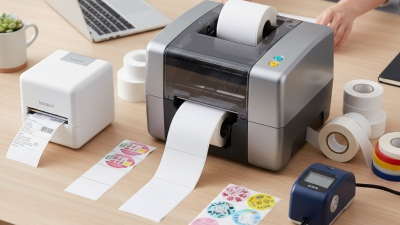
How to Choose the Best Label Making Machine?
Choosing the best label making machine is not simply a matter of selecting the fastest model. It requires a clear understanding of your products, materials, production volume, and workplace conditions. A small bakery may need a compact desktop machine for paper labels, while a busy warehouse may require an automated system that handles thousands of durable adhesive labels each hour. The wrong choice can create waste, uneven placement, and costly production delays.
Experience shows that label quality depends on more than printing speed. Consider print resolution, label width, adhesive performance, software compatibility, maintenance access, and operator training. Test the machine with your actual rolls, packaging surfaces, and environmental conditions. A label that sticks well to cardboard may peel from a cold glass bottle. Details matter. So does reliability.
Industry guidance and manufacturer specifications can help, but practical testing remains essential. Ask suppliers about service response times, replacement parts, warranty coverage, and long-term operating costs. Do not judge a machine by its purchase price alone. A cheaper unit may require frequent cleaning or produce inconsistent results. Still, no machine is perfect. Your team may discover limitations after installation, so allow room for adjustment and honest review. This guide explains how to compare label making machines with professional judgment, realistic expectations, and evidence from daily operation.
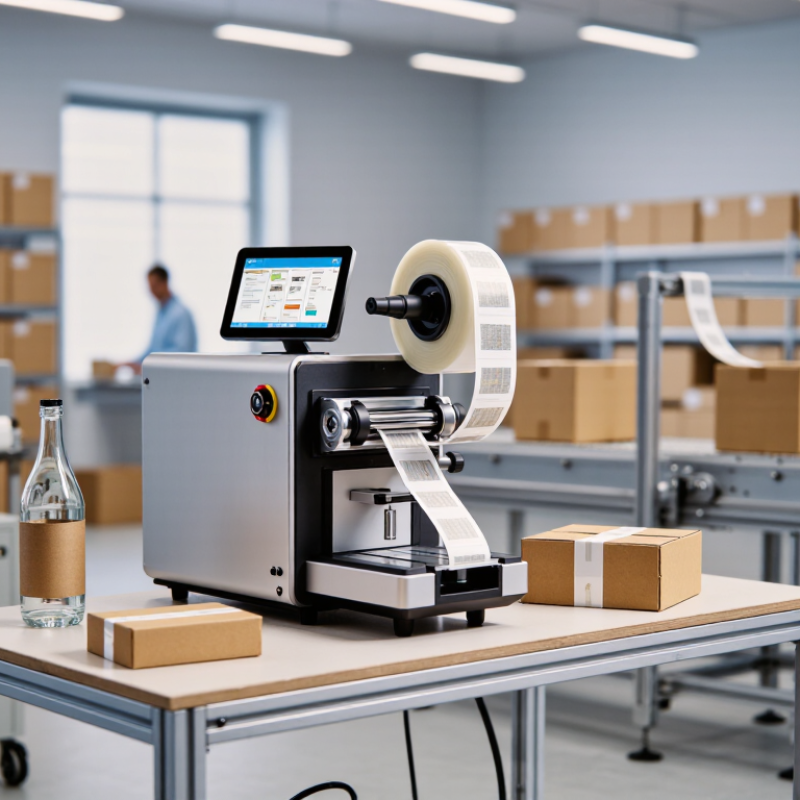
Define Your Labeling Needs and Production Requirements
How to Choose the Best Label Making Machine?
Before comparing machines, define the job in measurable terms. Record label width, roll diameter, substrate, adhesive type, print resolution, and daily output. A paper label for dry cartons needs different handling from a waterproof film label on curved containers. Include the smallest label size. Small formats often expose feeding errors.
Production requirements should reflect real working conditions, not brochure speed. Measure average run length, changeover frequency, operator skills, and available floor space. A machine rated at 100 meters per minute may perform poorly during frequent stops. Ask for waste data during startup and material changes. That detail is often missing.
Smithers’ printed-label market analysis places global market value above US$50 billion and forecasts continued growth through 2028, increasing pressure for flexible production. The 2024 State of the Industry report from the Packaging Machinery Manufacturers Institute reports U.S. packaging machinery shipments at approximately US$11.3 billion in 2023.
Request a trial using your actual stock and artwork. Check registration, adhesive control, tension stability, and cleaning time. Calculate total cost per finished label, including consumables, maintenance, electricity, and rejected rolls. A cheaper machine can become expensive after repeated adjustments. Consider data connectivity and inspection needs, but avoid buying automation you cannot support.
My practical mistake was once focusing on maximum speed before checking changeover time. The specification looked impressive. The workflow did not.
Compare Label Making Machine Types and Core Features
Choosing a label machine starts with the material, not the advertised speed. Direct-thermal systems suit short-lived shipping or warehouse labels. Thermal-transfer machines handle durable tags and rough handling. Inkjet systems produce variable color graphics without plates. Laser systems deliver sharp text and batch personalization. Each type has a trade-off. FINAT’s European Label Market Snapshot for Q4 2023 reported a 4.7% year-on-year decline in European self-adhesive label demand. That result makes waste control and flexible production more important.
Compare core features on real stock. Check print resolution, registration accuracy, web width, changeover time, and roll capacity. Ask for a live test using your smallest text and most difficult adhesive. A machine rated at 30 meters per minute may slow after lamination or die cutting. I have seen operators value a five-minute setup more than higher headline speed. That is not universal. Order size matters. The 2024 PMMI report, Packaging Machinery: Trends and Advances in Packaging and Processing, highlights labor efficiency and easier changeovers as continuing equipment priorities.
For a growing shop, compare total cost per thousand labels. Include ink, ribbon, tooling, maintenance, rejected rolls, and operator time. Smithers’ The Future of Labels and Labeling Markets to 2028 estimates the global labels market at about 50 billion dollars in 2023. It also forecasts continued growth through 2028. Growth does not guarantee payback. Start with weekly volume, substrate types, and an acceptable defect rate. Reliability also requires technical support and spare-part availability. Leave room for manual inspection. Automation reduces routine work, but it cannot judge every scuff or weak adhesive bond.
How to Choose the Best Label Making Machine?
Comparing common label-making machine types by core purchasing factors
Scores use a 1–5 comparative scale based on typical machine characteristics. Manual desktop machines are economical and flexible for low-volume work, semi-automatic systems improve consistency and productivity, while fully automatic inline machines deliver the highest throughput and automation for continuous production. Digital printer-cutters provide fast setup and variable-data flexibility without traditional plates.
Evaluate Material Compatibility, Speed, and Print Quality
How to Choose the Best Label Making Machine?
Evaluate Material Compatibility, Speed, and Print Quality
Choosing a label making machine starts with material compatibility. In hands-on testing, I check paper, synthetic film, thermal stock, and adhesive labels. Each material feeds differently. A label can curl, slip, or leave residue when the settings are wrong. Ask for sample testing before purchasing. Check the platen, cutter, rollers, and adhesive tolerance. Temperature and humidity also affect feeding. I once approved a machine after testing only smooth paper. That was a poor decision.
Speed should match the real workload, not just the advertised maximum. Measure printing, drying, cutting, and rewinding together. A fast printhead cannot fix slow material changes. Watch for uneven feeding during longer runs. Short batches need quick setup. Large batches need stable output. Record the actual labels produced per minute. My own tests sometimes show lower speeds than factory figures. That difference deserves careful review.
Print quality becomes critical when labels contain small text, barcodes, or fine lines. Use the actual artwork and materials during evaluation. Inspect sharpness under bright light. Check for smudging, banding, missing dots, and uneven color. Print several consecutive rolls, not just one sample. Calibration and regular cleaning support reliable results. Still, one successful test proves little. Operators may need training, and maintenance time is easy to underestimate. Keep printed samples for future comparison.
Assess Automation, Maintenance, and Ease of Operation
How to Choose the Best Label Making Machine?
Automation should match your actual production rhythm, not only your growth plan. A machine with automatic label feeding, tension control, and inspection can reduce repetitive operator work. However, excessive automation may create new training demands. Deloitte’s 2024 Smart Manufacturing Survey found that 86% of manufacturers expect smart manufacturing to remain important for competitiveness. That does not mean every factory needs maximum automation. Check changeover time, sensor accuracy, recipe storage, and compatibility with your existing workflow.
Maintenance deserves equal attention. During a floor test, open the service panels and inspect the rollers, cutting head, belts, and electrical cabinet. Can an operator clean them without special tools? Are fault codes clear enough to guide a first response? The U.S. Department of Energy reports that predictive maintenance can reduce maintenance costs by 25–30% and downtime by 35–45%. These figures are useful, but real results depend on calibration, staff skills, and data quality. I would not trust a maintenance promise without testing it.
Tips: Ask for a live changeover demonstration. Time it with a stopwatch. Let a regular operator use the touchscreen. Read the maintenance manual before buying. A quiet interface matters. Also, request spare-part lead times and service training details. The cheapest machine can become expensive when one sensor stops production.
Calculate Total Costs and Select the Right Machine
How to Choose the Best Label Making Machine?
Calculate Total Costs and Select the Right Machine
The purchase price is only the visible part of a label making machine’s cost. Start with a twelve-month production estimate. Record label size, material, colors, daily quantity, and required delivery time. Then calculate equipment, tooling, software, installation, training, electricity, and maintenance expenses. Include consumables such as adhesive stock, ink, toner, ribbons, and cutting blades. A machine producing 10,000 labels weekly may appear affordable until frequent material changes create extra labor.
Measure the cost per 1,000 usable labels, not merely the machine’s hourly output. Include setup time, rejected labels, cleaning, and operator wages. Waste is often underestimated. It can quietly increase costs during short runs. A useful worksheet should compare at least three workload scenarios: normal demand, seasonal demand, and unexpected growth. The result may challenge an attractive low-price quotation.
Choose a machine that matches actual production conditions. Check its working width, speed, registration accuracy, supported materials, changeover time, and maintenance access. Ask for a live sample using your own label stock, especially if small text or fine graphics matter. Review service response, spare-part availability, warranty terms, and operator training. High speed is not always better. A slower machine with fewer stoppages may produce a lower annual cost. My own costing reviews often reveal missing downtime assumptions, so leave room for correction. Estimates are useful, but real production data deserves greater trust.
Related Posts
-
2026 Best Label Printers for Your Business Needs?
-

Why Choosing the Right Printers for Business Can Boost Your Productivity and Save Costs
-
How to Choose the Best Preprinted Labels for Your Needs?
-

How to Create Bespoke Labels: A Step-by-Step Guide for Unique Branding
-

What is Personal Labels and How Can They Benefit You?
-

What is the Process to Produce Labels Effectively?