Why Labels for Business are Essential for Successful Procurement?
In today's fast-paced business environment, "labels for business" play a crucial role in enhancing procurement processes. Industry expert John Anderson emphasizes, "Effective labeling streamlines operations and minimizes errors." This statement underscores the importance of clarity in labeling for supply chain efficiency.
Accurate labels ensure that products are easily identifiable and traceable throughout the procurement cycle. Poor labeling can lead to costly mistakes, affecting inventory management and operational efficiency. An effective labeling system supports manufacturers, suppliers, and retailers alike.
Many companies overlook the impact of labels on their business operations. They may focus more on product quality than on presentation. However, without well-defined labels, even the best products may fail to reach their potential. Reflecting on labeling practices is essential for continuous improvement in procurement.
Importance of Labels in Business Procurement Processes
Labels play a crucial role in business procurement processes. They provide essential information about products, such as origin, ingredients, and safety instructions. This information helps procurement teams make informed decisions. Effective labeling reduces the risk of errors. When products are properly labeled, it prevents costly mistakes.
Additionally, labels enhance transparency. Stakeholders can easily verify compliance and standards. This builds trust with suppliers and customers alike. Clear labeling can also streamline the inventory process. It allows for easier tracking of items and reduces delays. In a fast-paced environment, efficiency is paramount.
However, there are challenges with labeling. Some companies struggle with keeping information up-to-date. Inconsistent labeling practices can confuse team members. This inconsistency may lead to misunderstandings and compliance issues. Addressing these challenges is vital for procurement success. Businesses must continually evaluate and adapt their labeling strategies. A proactive approach is necessary for maintaining effectiveness in procurement.
Understanding Different Types of Labels Used in Procurement
In procurement, labels play a vital role. They ensure clarity and efficiency in the supply chain. Accurate labeling helps avoid misunderstandings. According to a report from SupplyChain247, businesses lose 10-30% of their revenue due to poor labeling and inventory errors. These figures highlight the necessity for precise and clear labels.
Different types of labels serve various purposes in procurement. For example, barcode labels accelerate inventory management. They allow tracking of products throughout the supply chain. A 2021 study by ResearchAndMarkets indicates that the barcode label market is projected to grow by 4% annually. This growth reflects the increasing reliance on technology for efficient handling.
Another significant type is compliance labels. These are crucial for safety and regulatory standards. They ensure that products meet necessary legal requirements. A survey from the National Institute of Standards and Technology revealed that 75% of procurement professionals face challenges with compliance issues. This statistic underscores the importance of using the correct compliance labels to mitigate risks. However, some companies still overlook this aspect, risking penalties and reputation damage.
Understanding the Importance of Labels in Procurement
How Labels Enhance Inventory Management and Tracking
Labels play a pivotal role in effective inventory management and tracking. They provide clear identification of products and their characteristics. This clarity minimizes confusion during the procurement process. Without proper labeling, mistakes can easily occur. Misplaced items or incorrect counts can lead to financial losses and operational delays.
Furthermore, well-designed labels enhance the speed of inventory processes. Workers can quickly locate items based on label information. This saves time and boosts productivity. When every item has a clear label, the workflow becomes smoother. Yet, not every organization fully utilizes labels. Some may overlook the simplicity of effective labeling strategies. This oversight can hinder the potential benefits that come with streamlined tracking.
Moreover, labels support compliance and quality assurance. They help maintain standards by providing necessary information about each item. However, it is essential to regularly assess label systems. Over time, labels may become damaged or outdated. Organizations must be vigilant about reviewing and refreshing their labeling practices to ensure ongoing efficiency.
The Role of Compliance and Regulatory Information on Labels
Labels play a crucial role in procurement, particularly regarding compliance and regulatory information. Proper labeling helps businesses adhere to safety and quality standards.
According to data from industry sources, nearly 70% of procurement professionals assert that compliance is critical to their sourcing decisions. Labels provide necessary information about product ingredients, usage instructions, and hazard warnings.
In regulated industries, labels carry legal significance. They ensure transparency and accountability. Mislabeling can lead to compliance issues and severe penalties. Studies show that 42% of companies have faced fines due to incorrect labeling practices.
These statistics underline the importance of accurate label information to protect both businesses and consumers.
Tips: Always verify label information against regulatory guidelines. This step can mitigate risks significantly. Train staff on the importance of labels to reinforce quality control. Regular audits of labeling practices can also help identify potential compliance gaps.
Each of these practices contributes to smoother procurement processes and builds trust.
Best Practices for Implementing Effective Labeling Systems in Procurement
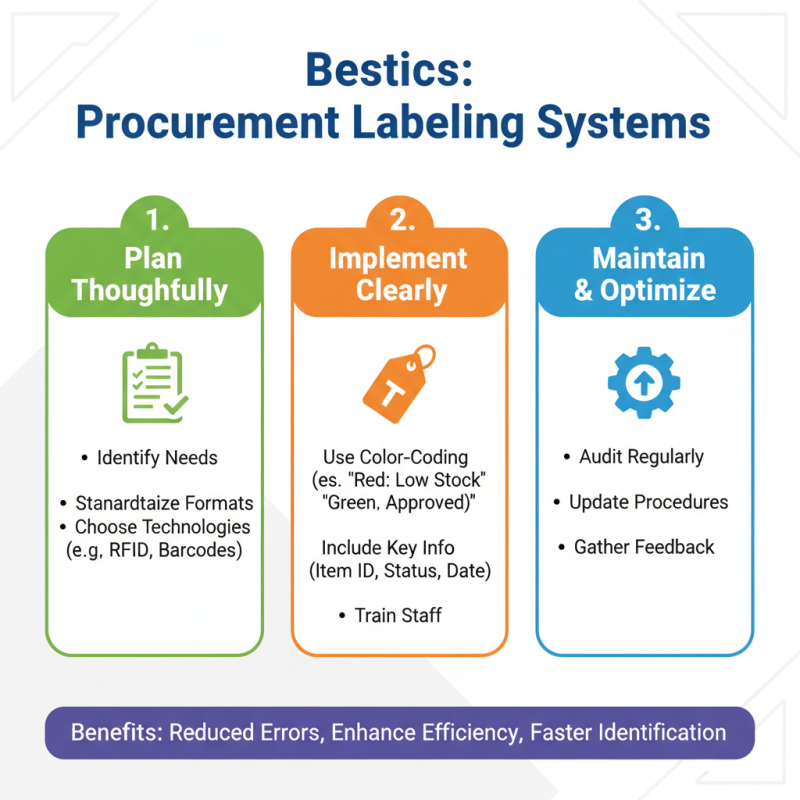
Implementing an effective labeling system in procurement is a crucial step for any organization. Clear labels help in identifying products easily. They reduce errors and enhance efficiency. For example, color coding can indicate the status of inventory items. This allows staff to prioritize tasks effectively. However, creating such a system requires thoughtful planning and consistent application.
Training staff is essential for success. Employees must understand the labeling system. Without adequate training, even a well-designed system can fail. Regular workshops can ensure everyone is on board. But relying solely on digital solutions may lead to oversights. It's important to combine technology with manual checks to maintain accuracy.
Constant evaluation of the labeling process is necessary. Gather feedback from staff to identify issues. This can reveal areas needing improvement. For some, implementing a labeling system can feel overwhelming. Starting small and scaling gradually can ease this transition. Focus on areas with the highest impact first. This way, organizations can build a robust system over time.