Top Industrial Vision Inspection Innovations at Canton Fair 2026?
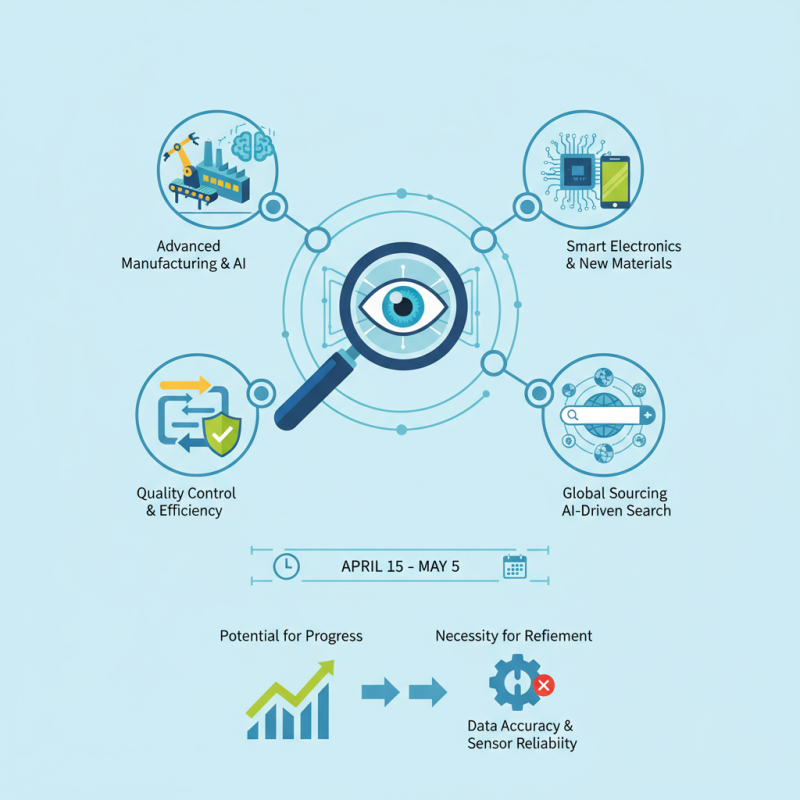
As the 139th Canton Fair approaches in 2026, innovations in Industrial Vision Inspection are set to take center stage. This event highlights advancements in advanced manufacturing, smart electronics, and new materials, drawing attention from industry leaders. With the introduction of AI technologies, businesses can enhance their inspection processes, improving quality control and efficiency.
The fair spans from April 15 to May 5, focusing on diverse sectors. AI-driven search functions allow buyers to swiftly identify qualified suppliers based on certifications like ISO and CE. This innovation streamlines the procurement process, enabling seamless navigation across the vast 1.55 million square meter venue.
However, the integration of technology isn't without its challenges. Not all inspections are infallible; some vision systems may miss minute defects. This underscores the need for continuous improvement and feedback in inspection methodologies. As companies adopt these technologies, they must remain vigilant about data accuracy and sensor reliability. The evolving landscape of Industrial Vision Inspection at the Canton Fair reflects both the potential for progress and the necessity for ongoing refinement.
Leading Technologies in Industrial Vision Inspection Displayed at Canton Fair 2026
At Canton Fair 2026, innovative technologies in industrial vision inspection have taken center stage. These advancements aim to enhance manufacturing processes. Various companies showcased unique solutions that utilize cutting-edge imaging techniques. Machine learning and artificial intelligence are making inspections faster and more accurate.
Among the innovations displayed, high-resolution cameras stood out. They provide detailed images crucial for quality control. Automated systems for defect detection were also prominent. However, some attendees raised concerns about the reliance on technology. Misjudgments can occur if systems misinterpret data.
Additionally, integration remains a challenge. Many industries are slow to adopt these new technologies. Training staff to use advanced inspection systems is essential. Some solutions might temporarily disrupt existing workflows. Exploring these innovations offers potential for significant improvement. Yet, the industry must address these hurdles.
Top Industrial Vision Inspection Innovations at Canton Fair 2026
| Innovation Type | Key Features | Applications | Year of Introduction |
| 3D Vision Inspection | High accuracy, depth sensing, real-time analysis | Automotive, Electronics | 2026 |
| AI-Powered Inspection | Machine learning, adaptive quality control | Manufacturing, Packaging | 2026 |
| Smart Camera Systems | Compact design, integrated processing | Food Industry, Electronics | 2026 |
| Multispectral Imaging | Multi-wavelength analysis, improved defect detection | Textiles, Agriculture | 2026 |
| Embedded Vision Solutions | Low power usage, high-speed processing | Consumer Electronics, Automotive | 2026 |
Key Innovations in Image Processing Techniques for Quality Control
At the Canton Fair 2026, innovations in image processing techniques promise to reshape quality control in industry. High-resolution cameras and AI algorithms are gaining traction. Recent reports highlight that 70% of manufacturers are adopting smart inspection systems, significantly enhancing defect detection in products. This advancement reduces waste and increases efficiency.
However, challenges remain. Integration with existing systems can be complex. Many companies still face difficulties in training personnel to use these new technologies effectively. A significant number, around 30%, of industries report insufficient data to optimize their inspection processes. The reliance on constant software updates creates additional pressure.
Despite these struggles, the benefits cannot be overlooked. Increased accuracy leads to fewer recalls. Automated systems can analyze defects faster than human inspectors. The future looks promising yet requires careful consideration of these transitions. The balance between innovation and usability will dictate success in quality control.
Integration of AI and Machine Learning in Vision Inspection Systems
The integration of AI and machine learning in vision inspection systems has transformed the industrial landscape. These technologies enable machines to analyze visual data with unprecedented accuracy. According to a recent industry report, using AI can improve defect detection rates by up to 95%. This increase significantly reduces waste and boosts productivity, making operations more efficient.
AI algorithms learn from vast datasets. They adapt to various scenarios, handling complexity in inspections. Yet, reliance on AI requires constant updates and training. Some systems struggle with unusual defects that were not in their training data. These gaps can lead to missed inspections and costly errors in production.
Tips: Regularly update your AI models to improve accuracy. Test systems on diverse datasets to identify weaknesses. Over time, you will refine your inspection processes.
Machine learning models also reduce human error in inspections. However, they come with limitations. Small variations in products may confuse algorithms. Human oversight remains crucial in these scenarios. Balancing AI efficiency with human intuition can provide optimal results.
Advancements in 3D Vision Inspection Solutions for Manufacturing
The Canton Fair 2026 showcased remarkable advancements in 3D vision inspection solutions tailored for manufacturing. Key developments focus on enhancing accuracy and efficiency. One innovation involved using high-resolution cameras to capture intricate details during the inspection process. This allows manufacturers to detect potential defects more reliably than before.
Incorporating AI into 3D vision systems has transformed the way factories operate. These systems now analyze vast amounts of data in real time. They can learn from previous inspections, improving over time. However, this learning process is not flawless. Misinterpretations of data can still occur, necessitating human oversight.
Tips: Always evaluate the effectiveness of your inspection systems. Regularly update your AI models with new data. Collaboration between machines and humans leads to better results.
Moreover, 3D vision inspection tools must be user-friendly. Ease of integration into existing workflows is critical. If workers find the technology daunting, hesitance is likely. Ensuring clear guidelines can tackle this issue, bridging the gap between human expertise and technological advancement.
Impact of Enhanced Vision Inspection on Industry Standards and Efficiency
The impact of enhanced vision inspection technology on industry standards is profound. Companies are increasingly adopting advanced optical systems to improve product quality. These systems utilize high-resolution imaging to detect defects that the human eye might miss. This leads to fewer errors during production. However, there are challenges to consider.
With these innovations, industries experience a boost in efficiency. Automated inspections can speed up production lines significantly. Yet, reliance on technology raises concerns. What if the systems fail? Operators must remain vigilant and ready to intervene. Human oversight is essential, even in advanced setups.
Moreover, the integration of new technologies often requires retraining staff. Some workers may find it difficult to adapt. This brings potential setbacks. While vision inspection innovations offer great promise, they must be implemented mindfully. Balancing automation and human expertise is crucial for sustainable growth.
