How to Read and Understand Beverage Labels Effectively?
Understanding beverage labels is crucial in today's consumer market. According to a 2022 report by Beverage Marketing Corporation, over 70% of consumers look for ingredient transparency while choosing drinks. However, many struggle to decipher the information present on beverage labels. Food and beverage expert Dr. Susan Millerick emphasizes, “Many consumers miss vital information that could affect their health choices.”
Complex terminology and intricate designs often confuse shoppers. Ingredients like high fructose corn syrup or artificial colorings can be hidden behind jargon. Consumers frequently overlook serving sizes and nutrient percentages, leading to misinformation about calorie intake. A recent survey showed that nearly 40% of individuals do not fully understand product labels.
This lack of knowledge can lead to unhealthy choices. Misinterpretation of labels can result in exceeding sugar intake recommendations. As consumers, we need to pause and reflect on our understanding of beverage labels. Taking time to study these labels can foster informed decisions and promote healthier lifestyles. Every label tells a story—let’s ensure we read it right.
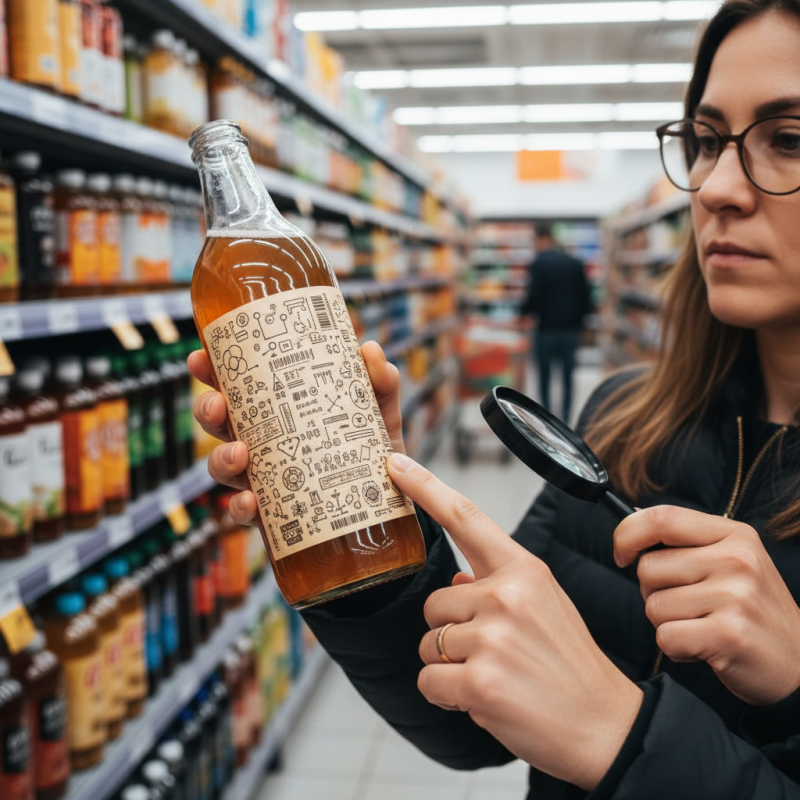
Understanding Beverage Labels: The Basics of Nutritional Information
Understanding beverage labels is crucial for making informed choices. Common components include serving size, calories, and sugar content. The FDA states that many consumers struggle with reading labels accurately. A study by the International Food Information Council found that only 50% of adults can interpret nutritional information effectively.
It's important to pay attention to the serving size. It can sneakily inflate the calorie count if you consume more than one serving. Many beverages may seem low in calories, but added sugars can be misleading. One popular beverage contains over 30 grams of sugar per serving. That’s more than double the recommended daily limit for adults.
Tip: Look for beverages with fewer than 10 grams of sugar. They often have a healthier profile. Watch for phrases like "low-fat" or "sugar-free." These can be misleading. They may still contain high levels of calories from other sources. Always read the ingredients list too. Real food ingredients should take priority over artificial ones. Make your choice with the facts, not just appealing labels.
How to Read and Understand Beverage Labels Effectively?
| Beverage Type |
Serving Size (ml) |
Calories |
Total Fat (g) |
Sugars (g) |
Protein (g) |
| Soda |
355 |
150 |
0 |
39 |
0 |
| Fruit Juice |
240 |
110 |
0 |
24 |
1 |
| Iced Tea |
355 |
90 |
0 |
22 |
0 |
| Energy Drink |
250 |
110 |
0 |
27 |
1 |
| Sparkling Water |
500 |
0 |
0 |
0 |
0 |
Decoding Ingredients: Identifying Added Sugars and Artificial Additives
Reading beverage labels can feel overwhelming, but it’s crucial to decode their secrets. Start with the ingredients list. Ingredients are usually listed in order of quantity. The first few items reveal what the drink mainly consists of. Pay special attention to added sugars. Words like "sucrose," "high-fructose corn syrup,” and “agave nectar” indicate the presence of hidden sugars. Many beverages are deceptively sweet.
Next, identify artificial additives. Ingredients such as "artificial flavoring" or "color additives" often raise red flags. These substances can affect health over time. It’s easy to overlook them when focused on pretty packaging. Remember, some drinks may seem healthy but contain harmful additives.
Don't be fooled by claims like "natural" or "organic.” These labels do not always mean the product is free from undesirable ingredients. Reflect on how the choices you make could impact your long-term health. Always question what goes into your body, even in small quantities. Each sip counts.
Understanding Added Sugars and Artificial Additives in Beverages
Serving Size Matters: How to Interpret Portion Sizes on Labels
When reading beverage labels, serving size is crucial. It dictates how much of the drink fits into one portion. Typically, smaller serving sizes can be misleading. You might think, "This drink is low in calories," without realizing the actual amount you usually consume. This leads to underestimating your intake.
Consider a bottle of juice. The label may show a serving size of 8 ounces, but many people drink 12 ounces or more. This discrepancy means you could be consuming more sugar and calories than you expect. Reflect on your habits when choosing drinks. Are you pouring more than the serving suggests?
Additionally, labels can use tricky language. Terms like "low calorie" or "light" don’t provide the full picture. The serving size could seem manageable, but consuming multiple servings can add up quickly. Pay attention to how these factors work together. Understanding serving sizes can help improve your dietary choices, making label reading an essential skill.
The Role of Daily Values: Understanding Nutritional Percentages
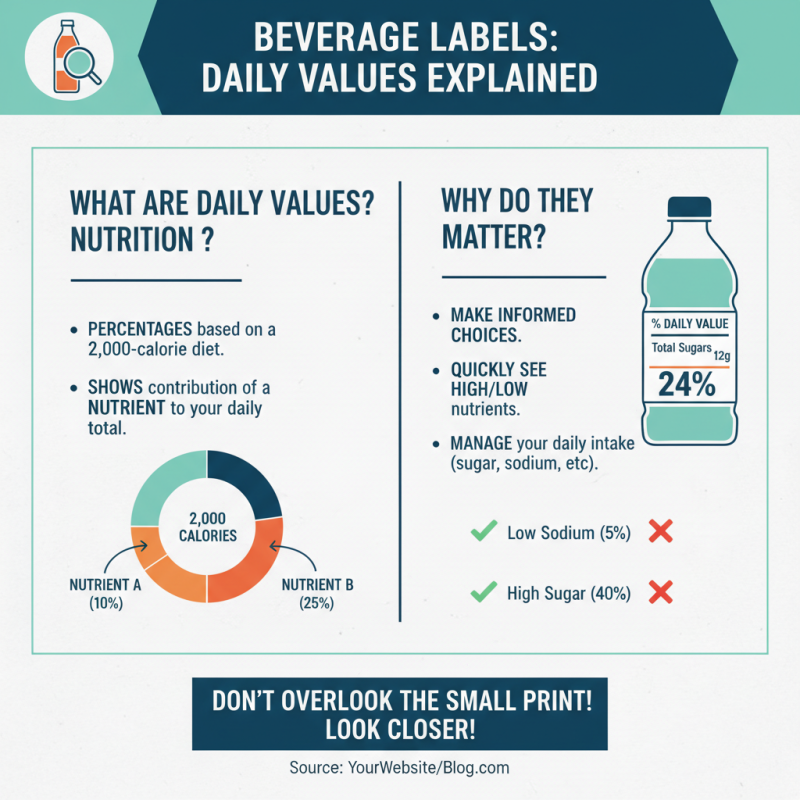
When you look at beverage labels, daily values (DVs) play a crucial role. They help you understand the nutritional makeup of the drink. DVs are presented as percentages, showing how much a nutrient contributes to your daily diet based on a 2,000-calorie intake. This can be confusing at times. Some people might overlook these percentages. It’s essential to look closely.
To make sense of these values, read the label thoroughly. Check for the serving size first. Sometimes, a “serving” isn’t what you expect. Tips: Compare the calories to your daily needs. If a drink has 20% of your daily sugar in one serving, consider if that's worth it.
Remember, not all beverages are equal. Some might seem healthy but have hidden sugars. Reflect on how often you drink certain beverages. Tip: Track your intake for a week. This can reveal patterns that affect your choices. Adjusting your preferences can lead to better decisions. Trust your instincts; if it seems too good to be true, it might be.
Regulatory Standards: How FDA and Other Agencies Define Beverage Labels
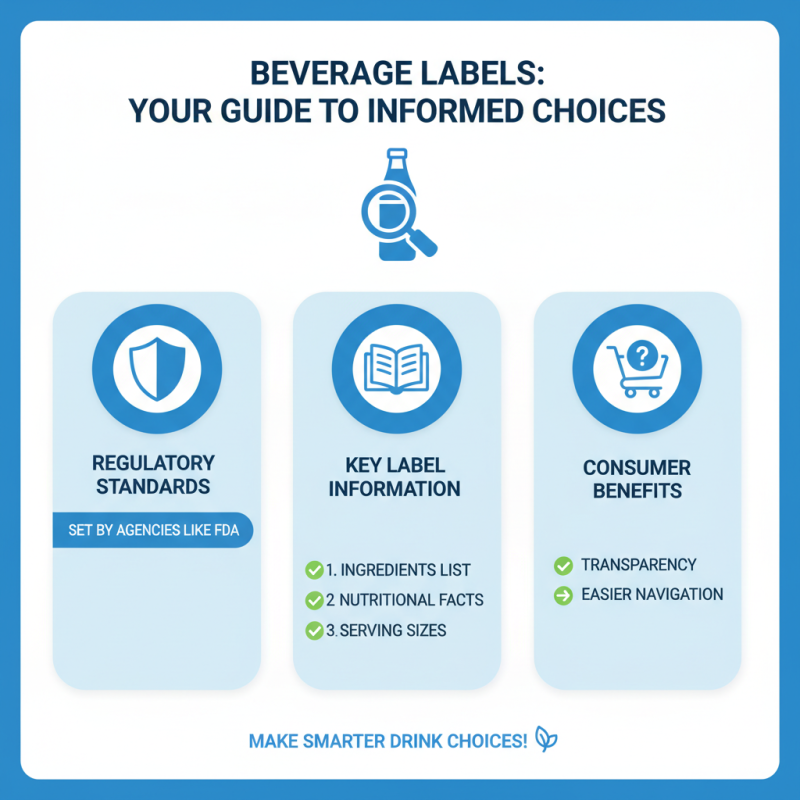
Understanding beverage labels is crucial for making informed choices. Regulatory standards set by agencies like the FDA play a key role in label information. The FDA mandates that beverage labels include essential details such as ingredients, nutritional facts, and serving sizes. This ensures transparency and helps consumers navigate their options better.
In recent data, about 70% of consumers check labels before buying a beverage. Everyone should be encouraged to read these details actively. However, many labels still confuse consumers. Terminology can be unclear. Words like "natural" or "light" often lack consistent definitions across the industry. According to a 2022 report, only 33% of consumers fully understand the claims made on beverage labels. This indicates a gap in awareness.
Despite regulations, not all labels meet consumer needs. For instance, serving sizes can mislead. A container may contain multiple servings yet appear like a single-serving drink at first glance. Consumers might assume they are drinking fewer calories than they really are. Awareness of these nuances is essential for making healthier choices.