Top Car Stacker Solutions for Efficient Vehicle Storage?
In the ever-evolving world of automotive storage, efficient solutions are crucial. "Car Stackers" have emerged as a game-changer for dealerships and collectors alike. Industry expert John Mitchell, a renowned car storage consultant, emphasizes, “The key to maximizing space is understanding how to stack vehicles effectively.” His insights resonate strongly in today's crowded urban landscapes.
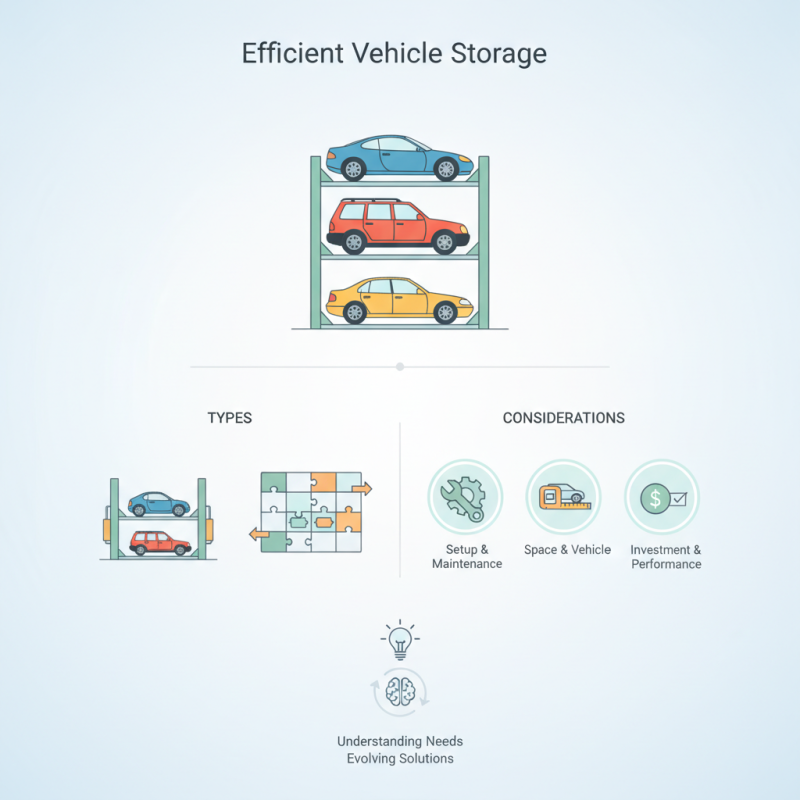
Modern car stackers come in various forms. They assist in optimizing space while ensuring the safety of vehicles. For example, hydraulic systems allow for smooth lifting and lowering. However, not all solutions may fit every need. Some users report challenges with setup and maintenance, revealing a gap in usability.
Investing in a car stacker requires careful consideration. While many promise efficiency, actual performance can vary. Understanding your specific requirements will lead to better choices. Every vehicle has unique storage needs, and a one-size-fits-all approach often fails. Thus, the quest for the ideal car stacker continues, inviting reflection on evolving consumer needs.
Benefits of Car Stackers for Urban and Commercial Spaces
Urban areas face significant challenges in vehicle storage. Compact spaces make it hard to accommodate every vehicle. Car stackers offer a practical and efficient solution. They allow for vertical parking, maximizing space usage in crowded environments. This technology can help commercial spaces too, where parking demand often exceeds supply.
Car stackers not only save space but also boost the aesthetic appeal of parking facilities. Many designs blend seamlessly with urban architecture. However, it's essential to consider maintenance and safety. Some users report issues with operational reliability. Regular checks can mitigate this, ensuring a safe environment for users.
In commercial settings, the investment in car stackers can reflect positively on business efficiency. Customers appreciate convenient and organized parking. Yet, businesses must ensure the technology is user-friendly, as complex systems can deter usage. A balance between advanced features and simplicity is crucial for success.
Top Car Stacker Solutions for Efficient Vehicle Storage
| Solution | Type of Installation | Capacity (Cars) | Dimensions (L x W x H) | Benefits |
| Hydraulic Car Stacker | Indoor/Outdoor | 2 | 5m x 3m x 2.5m | Space-saving, easy access |
| Mechanical Car Lift | Indoor | 4 | 6m x 4m x 3m | High load capacity, durable |
| Stacker Parking System | Automated | 10+ | 8m x 6m x 4m | Maximized space, user-friendly |
| Two-Post Car Lift | Indoor | 2 | 3m x 2.5m x 2.2m | Cost-effective, simple design |
| Four-Post Lift | Indoor/Outdoor | 4 | 5m x 3m x 2.5m | Stability, high safety |
Types of Car Stacker Systems: Automatic vs. Manual Solutions
When considering car stacker systems, there are two primary types: automatic and manual. Both options offer distinct advantages. Automatic systems often save space and time. They use a motorized mechanism to store and retrieve vehicles efficiently. This technology can be highly advantageous in urban settings where space is limited. However, these systems may require a higher upfront investment.
On the other hand, manual solutions provide a more hands-on approach. These systems rely on human operation and can be more cost-effective initially. Yet, they often demand more time and labor. Users may find manual systems less efficient during peak hours. Each system has its pros and cons, which necessitates careful consideration of individual needs and circumstances.
In any scenario, reliability is crucial. Factors such as maintenance and user training can impact performance. Automatic systems may seem superior, but breakdowns could cause delays. Similarly, manual systems might be slower but offer straightforward repairs. Balancing speed, efficiency, and cost is essential. A well-considered decision can significantly enhance vehicle storage solutions.
Key Features to Consider When Choosing a Car Stacker
When selecting a car stacker, there are several key features to consider. First, weight capacity is crucial. You need a stacker that can support your heaviest vehicles. Many models provide ratings that ensure safety and durability. Stability is another vital aspect. A well-designed stacker minimizes the risk of tipping and accidents.
Next, consider the footprint of the stacker. Space is often limited in garages or storage lots. Choose a model that maximizes vertical storage without compromising accessibility. Some stackers offer adjustable heights. This flexibility allows you to cater to various vehicle sizes.
A noise factor might seem minor, yet it impacts overall satisfaction. A quieter operation often makes for a better user experience. Ease of use is equally significant. Look for intuitive controls and a straightforward setup process. While all these features contribute to an effective car stacker, some users still report challenges in assembly. Sometimes, instructions can be vague, leading to confusion. Reflect on the importance of quality design and how that affects daily use.
Installation and Maintenance Tips for Car Stacking Systems
When considering car stacking systems, installation and maintenance play vital roles in ensuring safety and efficiency. Proper installation begins with a solid foundation. The surface must be level and able to support heavy loads. Regular checks for any settling or shifting in the foundation are essential. Ideally, hire professionals for the setup, as they can identify potential issues that may not be obvious to the untrained eye.
Once installed, routine maintenance is critical. Inspect the hydraulic systems frequently. Any sign of leaks should be addressed immediately. Lubricating moving parts helps prevent wear and tear. Monitor the overall structure for signs of rust or corrosion. It's important to maintain documentation of all inspections and repairs, as this builds a reliable history for the system. Keep in mind that neglecting these steps can lead to costly repairs or even accidents. A proactive approach will enhance the longevity and efficiency of your vehicle storage solution.
Future Trends in Vehicle Storage Technology and Innovations
The vehicle storage industry is evolving. As urbanization rises, innovative solutions are essential. Future trends focus on efficiency and sustainability. According to a 2023 industry report, automated parking systems can save up to 60% space compared to traditional parking. These systems also reduce vehicle emissions and improve user convenience.
Tips for maximizing your vehicle storage efficiency: Consider the layout. An optimized design minimizes wasted space. Invest in technologies that streamline access. With a surge in electric vehicle usage, charging stations become vital. Research shows that facilities with EV charging attract more customers and enhance property value.
Despite technological advancements, challenges remain. Early adopters of automated solutions reported high setup costs. Maintenance of these systems can be complex. Addressing these concerns is crucial for widespread implementation. Continuous innovation will be the key to navigating these obstacles and maximizing storage potential.
