2026 Top Trends in Industrial Labels You Should Know?
In the evolving landscape of manufacturing, industrial labels play a crucial role. They enhance safety, ensure compliance, and aid in inventory management. As we approach 2026, key trends are emerging in the realm of industrial labels. These trends reflect the changing needs of industries and advances in technology.
One notable trend is the rise of smart labels. These labels incorporate RFID technology, offering real-time tracking of products. Another significant movement is sustainability. Companies are turning to eco-friendly materials to produce labels. This shift requires businesses to rethink their labeling strategies. It’s not just about identifying products anymore. It’s about being responsible too.
Additionally, customization is gaining traction. Businesses are seeking labels tailored to their specific requirements. Generic solutions are losing appeal. The challenge lies in balancing cost with quality. As the demand for precision increases, companies must think critically about their labeling choices. The future of industrial labels is bright but requires careful consideration and adaptation.

Emerging Materials in Industrial Label Manufacturing
In the evolving landscape of industrial label manufacturing, the use of emerging materials is shaping the future. According to a recent market report, the global market for industrial labels is projected to reach $52.3 billion by 2026. This growth is driven by advancements in materials that enhance durability, sustainability, and efficiency. New substrates such as bio-based plastics and recycled materials are gaining traction. These alternatives not only reduce environmental impact but also meet industry standards.
Moreover, innovations in adhesives play a crucial role. Traditional adhesives often fail under extreme conditions. New formulations promise improved performance even in harsh environments. A notable trend is the use of pressure-sensitive adhesives that provide better adhesion and remove without residue. However, these advancements also raise questions about compatibility and application processes. Companies must reassess how they implement these materials into existing workflows.
Despite these positive trends, challenges remain. The transition to newer materials can be complex and costly. Many manufacturers face issues with sourcing sustainable options while maintaining quality. Additionally, inconsistent performance can hinder adoption. It's essential for stakeholders to address these issues proactively. Balancing innovation with practical implementation will determine the future of industrial label manufacturing.
2026 Top Trends in Industrial Labels You Should Know
| Trend |
Description |
Emerging Materials |
Sustainability Impact |
| Smart Labels |
Integration of RFID and NFC for tracking and authentication. |
Conductive inks and recyclable polymer substrates. |
Reduces waste through improved inventory management. |
| Eco-Friendly Materials |
Development of biodegradable labels and adhesives. |
PLA (Polylactic Acid), recycled paper. |
Promotes circular economy and reduces landfill waste. |
| Cold Chain Compliance |
Labels that monitor temperature and humidity during transit. |
Thermal transfer materials and specialized inks. |
Ensures product integrity, reducing spoilage. |
| Enhanced Durability |
Labels that withstand harsh environmental conditions. |
UV-resistant materials and tough adhesives. |
Longer lifespan reduces need for re-labeling, cutting waste. |
| Digital Printing Capabilities |
Custom and short-run labels with high-quality graphics. |
Eco-friendly inks and materials tailored for digital use. |
Minimizes material waste in production processes. |
Advancements in Printing Technologies for Labels
Advancements in printing technologies have significantly transformed industrial labels. Digital printing has emerged as a powerful tool. It enables faster production and offers high-quality graphics. Unlike traditional methods, digital printing eliminates the need for plates. This change reduces costs and allows for short runs and custom designs.
Flexographic printing continues to evolve, featuring faster speeds and better ink options. Eco-friendly inks are also gaining traction. These advancements are critical for businesses that prioritize sustainability. However, some companies still hesitate to adopt new technologies. Resistance to change can hinder growth and increase costs in the long run.
Label printing now allows for greater personalization, using data-driven insights. However, the challenge lies in maintaining consistency and quality across batches. Small errors can lead to significant setbacks. As equipment becomes more sophisticated, training staff becomes essential. Balancing technology and human expertise is key for success.
Sustainability Trends in the Label Industry
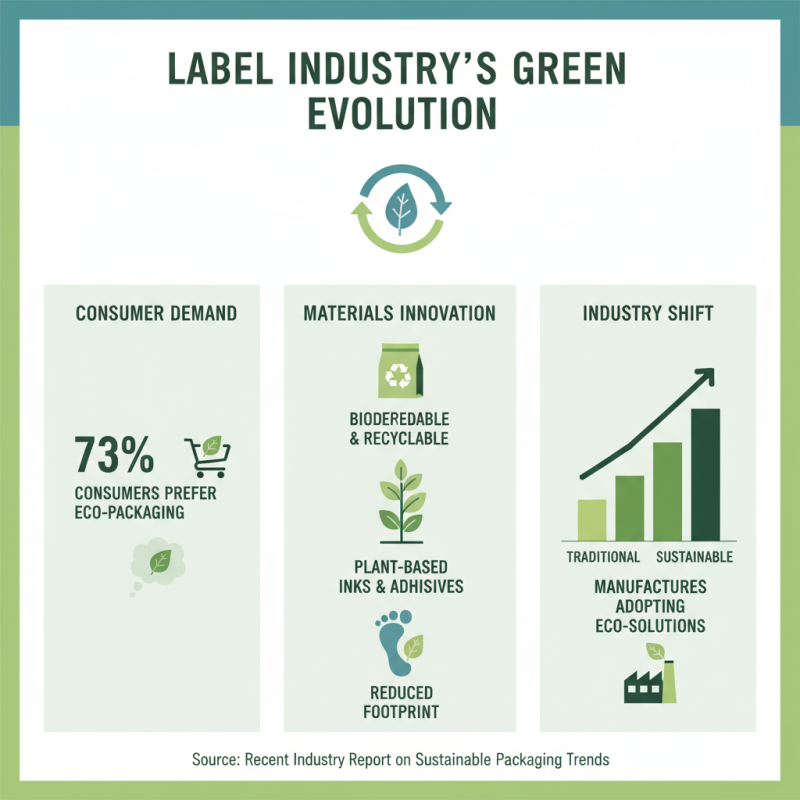
The label industry is experiencing a significant shift towards sustainability as environmental concerns rise. According to a recent report, 73% of consumers prefer products with eco-friendly packaging. This preference is driving manufacturers to rethink their labeling materials. Biodegradable and recyclable options are becoming more prominent. Companies are exploring innovations like plant-based inks and adhesives, which can drastically reduce their carbon footprint.
Despite these advancements, the transition is not without challenges. Many producers still find it difficult to source sustainable materials. The cost of eco-friendly labels can also deter smaller businesses. A study showed that about 40% of companies are hesitant to invest in sustainable options due to higher initial expenses. Consumer expectations and regulatory pressures force a change, but the pace remains slow.
Some manufacturers are adopting transparency practices. They share their sustainability goals and progress with customers. This openness can foster trust. However, many brands struggle to provide accurate information. Misinformation could undermine their efforts. The path toward sustainability in the label industry is complex, but the necessity for transformation is clear.
Integration of Smart Technologies in Industrial Labels
The integration of smart technologies in industrial labels is transforming manufacturing. Industry reports indicate that the global smart labels market is expected to exceed $35 billion by 2027, growing annually by over 15%. Companies are increasingly adopting RFID, QR codes, and NFC technologies to enhance traceability and efficiency. These labels provide real-time data, alongside automatic updates and inventory management.
However, the transition isn't seamless. Many businesses encounter challenges in integrating these technologies. Issues like compatibility with legacy systems can hinder progress. Additionally, there is a learning curve for employees. Some workers may struggle to adapt, leading to inefficiencies. A significant percentage of manufacturers express concerns regarding data security, which is critical as smart labels are linked to centralized systems.
Despite these challenges, the potential of smart labels is impressive. Improved supply chain transparency is achievable. Enhanced customer engagement through interactive labels can change the shopping experience. Yet, companies must reflect on their adoption strategies, ensuring they combine technology with user training. This balance will define success in the ever-evolving landscape of industrial labeling.
Regulatory Changes Impacting Label Compliance and Design
The landscape of industrial labels is shifting rapidly due to regulatory changes. Compliance requirements are becoming stricter, impacting label design significantly. A recent report by the Label Industry Global Statistics showed that over 70% of label manufacturers must adapt to new regulations, affecting their production processes. These changes often focus on safety, environmental impact, and consumer transparency.
In the U.S., the FDA's updated guidelines on food labeling lead to a surge in reformulation of label designs. Many companies find their existing labels no longer compliant, resulting in increased operational costs and delays. This scenario forces producers to rethink their design strategies while ensuring they remain compliant. A survey indicated that 65% of businesses saw a need for redesigns due to the new standards.
These adjustments often come with challenges. Companies struggle to balance compliance with eye-catching design. Some labels become overcrowded with required information, losing clarity. This can confuse consumers, countering the goal of transparent communication. As regulations continue to evolve, the industry must be agile, ready to address these conflicts in the pursuit of effective labeling.