
10 Best Places If I Need Labels Printed?
When I say “i need labels printed,” I am rarely looking for paper alone. I need a reliable result that survives handling, moisture, sunlight, shipping, and rushed application. The right printing source can prevent crooked edges, weak adhesive, blurred barcodes, and expensive reorders. This guide explores 10 best places to consider, from local print shops and online label specialists to office-supply stores and packaging vendors.
Packaging consultant Mike Ferrari has described packaging as “the silent salesperson.” That idea applies directly to labels. A small product sticker may carry your brand name, ingredients, instructions, or a barcode. It must look clear within seconds. Experienced printers should explain material choices, adhesive strength, finish, color accuracy, and proofing before production. They should also provide practical samples when the project deserves closer testing.
Not every popular provider will suit every order. A nearby shop may offer personal advice, while an online service may provide better pricing for repeat batches. My own judgment would not rely on price alone. I would inspect a sample under bright light, rub the printed surface, and test the label on the actual container. Even then, mistakes happen. A design can look perfect on screen and feel too crowded in print. That is why this list focuses on useful comparisons, honest limitations, and details that make choosing easier when you need labels printed quickly.
Choosing the Right Label Printing Service for Your Needs
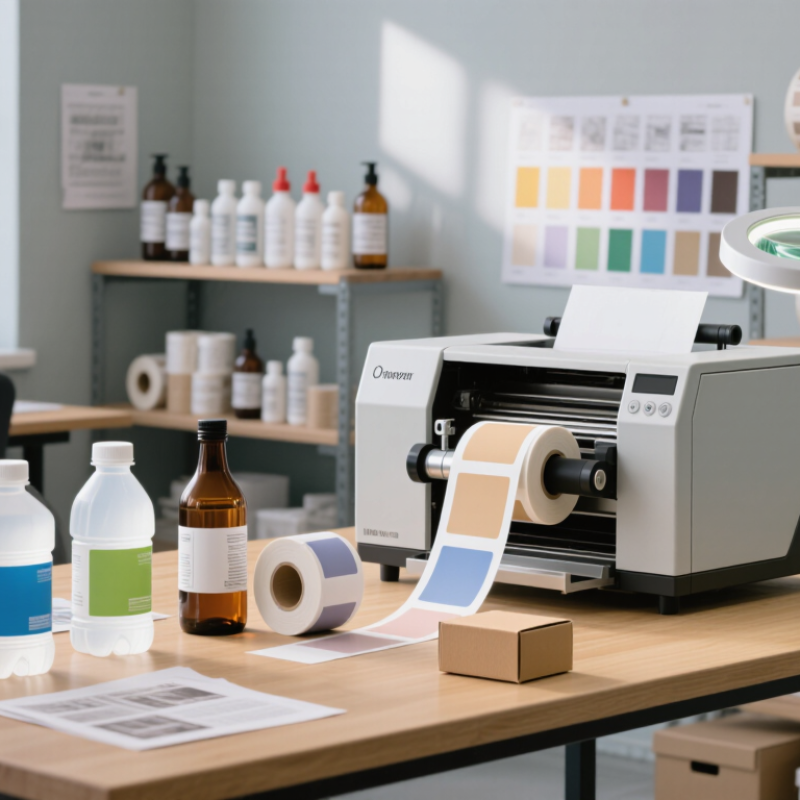
I match the printing service to the label’s job. Local print shops suit urgent, small batches. Online specialists handle repeat orders. Packaging converters coordinate labels with cartons. Office-supply counters cover basic sheets. Sign shops produce large adhesive graphics. Industrial printers make durable tags. Craft printers handle short runs. Fulfillment partners manage variable data. Trade printers serve wholesale volumes. In-house printers support rapid testing. The right choice depends on material, quantity, finish, and delivery risk.
Market data supports careful selection. Grand View Research estimated the global self-adhesive label market at about $48.3 billion in 2023. It projects a 5.2% annual growth rate through 2030. FINAT’s 2024 Radar reported a 2.1% decline in European demand during 2023. More options do not guarantee better results. Request a physical proof. Test adhesion on the actual container. Check glass, textured paper, cold plastic, and refrigerated surfaces. Confirm color tolerance, barcode readability, roll direction, core size, and minimum order quantity.
My production checks reveal costly details. I once approved artwork without confirming winding direction. The design looked correct. The applicator could not use it. Request written specifications, batch records, and a defect replacement policy. For regulated packaging, obtain professional compliance review. Printing accuracy cannot replace legal review. Compare total cost, including setup, shipping, proofs, and waste. My first choice is rarely perfect.
10 Best Places If I Need Labels Printed? - Choosing the Right Label Printing Service for Your Needs
| Rank | Printing Service Type | Best For | Common Label Formats | Typical Materials | Typical Turnaround | Typical Order Size | Main Advantage | Important Consideration |
|---|---|---|---|---|---|---|---|---|
| 1 | Online Custom Label Printer | Small businesses, product launches, and repeat orders | Roll labels, sheets, stickers, and hang tags | Paper, coated paper, polypropylene, polyester, and kraft stock | About 3–10 business days after artwork approval | Usually 50 to 10,000+ labels | Convenient ordering with online proofing and size options | Shipping time, setup fees, and minimum quantities vary |
| 2 | Local Commercial Print Shop | Urgent projects and customers who need in-person support | Cut sheets, decals, short-run stickers, and small roll orders | Paper, synthetic paper, vinyl, and adhesive films | Same day to 5 business days, depending on equipment and workload | Usually 25 to 5,000 labels | Fast communication, physical samples, and local pickup | Prices and capabilities differ substantially between locations |
| 3 | Digital Label Converter | Professional product packaging and variable designs | Roll labels, barcode labels, wrap labels, and sequential numbering | Paper, film, foil, clear stock, and specialty substrates | About 5–15 business days | Commonly 500 to 100,000+ labels | High-quality color control and efficient short-to-medium runs | May require print-ready files and higher minimum quantities |
| 4 | Flexographic Label Printer | Large-volume packaging and consistent repeat production | Roll labels, pressure-sensitive labels, and continuous webs | Paper, polypropylene, polyester, film, and foil-laminated stock | About 10–25 business days, including plate preparation | Typically 10,000 to several million labels | Low unit cost at high volumes and reliable color consistency | Setup costs make it less economical for very small orders |
| 5 | Packaging Supplier with Label Services | Businesses ordering labels alongside boxes, pouches, or containers | Product labels, safety labels, seals, and packaging stickers | Paper, film, foil, tamper-evident materials, and recyclable stocks | About 7–20 business days | Usually 1,000 to 100,000+ labels | Can coordinate label dimensions with the packaging design | Material choices and custom finishing can increase the cost |
| 6 | Wide-Format Sign and Graphics Shop | Large decals, outdoor graphics, window labels, and specialty shapes | Vinyl decals, floor graphics, wall labels, and window graphics | Adhesive vinyl, removable films, static cling, and laminated media | Same day to 7 business days | Often 1 to 500 pieces | Handles oversized graphics and durable outdoor applications | Usually not the most economical choice for small product labels |
| 7 | Office and Copy Print Center | Basic address labels, identification labels, and quick prototypes | Sheet labels, name labels, address labels, and simple stickers | Standard paper and limited synthetic sheets | Same day to 3 business days | Usually 10 to 1,000 labels | Accessible for simple files and low-volume needs | Limited options for roll formats, specialty adhesives, and finishing |
| 8 | Direct Mail and Fulfillment Provider | Mail campaigns requiring printing, addressing, and application | Address labels, response labels, barcode labels, and mailing stickers | Paper, laser-compatible stock, and weather-resistant synthetic media | About 5–15 business days after data approval | Usually 1,000 to 1,000,000+ pieces | Combines variable-data printing with sorting and fulfillment | Best suited to mailing workflows rather than retail packaging |
| 9 | Specialty Compliance Label Printer | Chemical, industrial, laboratory, logistics, and regulated products | Warning labels, durable asset labels, barcode labels, and tracking labels | Polyester, polypropylene, vinyl, thermal-transfer stock, and durable films | About 5–15 business days | Often 100 to 50,000 labels | Can specify resistance to moisture, abrasion, chemicals, or heat | Regulatory wording and durability requirements must be verified |
| 10 | In-House Label Printing | On-demand labels, inventory control, and frequent design changes | Desktop roll labels, sheet labels, barcode labels, and shipping labels | Direct-thermal paper, thermal-transfer stock, paper, and synthetic media | Minutes to one business day | From 1 label to several thousand per day | Immediate production and full control over variable information | Requires equipment, consumables, maintenance, and staff training |
Note: Turnaround times, order quantities, materials, and pricing are typical industry ranges. Actual specifications depend on label size, artwork, ink coverage, adhesive requirements, finishing, shipping location, and production capacity.
Related Posts
-
Where Can I Get Labels Printed Online?
-
Discover Labels for You at the 139th Canton Fair 2026?
-
Why is Label Making Essential for Your Global Sourcing Needs?
-

Why Choose Bespoke Label Printing for Your Business Needs?
-
Top 10 Tips for Printing Labels Efficiently
-
10 Tips for Creating Personalized Labels That Stand Out