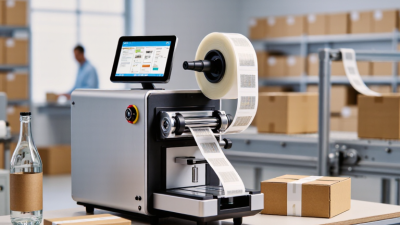
How to Choose Label Making Machines for Global Sourcing?
Choosing label making machines for global sourcing requires more than comparing prices. The wrong machine can produce uneven cuts, weak adhesive performance, or costly production delays. Smithers’ report, The Future of Global Printed Labels to 2028, forecasts continued growth in printed labels, driven by food, beverage, healthcare, and e-commerce packaging. This expansion increases pressure on suppliers to deliver consistent quality across different materials and markets.
FINAT’s market research also shows strong demand for self-adhesive labels in Europe, while sustainability expectations continue to influence equipment investment. Jules Lejeune, FINAT’s managing director, has stated, “Sustainability is no longer a niche topic; it is becoming a business imperative.” That view matters when evaluating label making machines with energy-saving systems, recyclable material compatibility, and reduced setup waste. Ask for measured figures, not attractive promises.
Practical sourcing begins with the product itself. A narrow roll may need different tension control than a wide roll. A thermal label can require different cutting pressure than a durable industrial label. Check hourly output, maximum web width, registration accuracy, changeover time, and local service coverage. Request sample production using your actual stock. Test the labels after heat, moisture, and transport.
The numbers may disappoint.
A cheaper machine can create higher ownership costs through downtime, spare parts, and operator training. Supplier claims should be verified through factory audits, reference customers, and documented acceptance tests. No single specification fits every market. A careful decision balances automation, compliance, maintenance access, and realistic production volume. Mistakes happen, but untested assumptions are expensive.
Define Your Labeling Needs and Production Requirements
Define the label before choosing the machine. Note its finished size, shape, material, adhesive, and core or roll dimensions. A small bottle label may need a flexible stock that stays flat around a curve. A carton label may require different stiffness and adhesion. Include the surface, temperature, and moisture conditions the label will face.
Then map the production task. Estimate labels per hour, daily operating time, and peak demand, not just average output. Check whether artwork changes often, whether variable data such as dates must be printed, and how operators will load rolls and change settings. Allow time for setup. It matters. Also specify acceptable print quality, placement tolerance, inspection needs, and how rejected labels are handled. These details help suppliers compare equipment against the same requirements, especially when sourcing internationally.
A sample roll and a short production trial can reveal issues that a specification sheet misses. Watch for wrinkles, slipping, slow changeovers, and labels that peel at the edges. Ask for confirmed speed using your actual label stock, rather than relying only on a maximum rating. I would leave some capacity for growth, but not pay for an oversized machine without a clear reason. It is easy to underestimate changeover time. That estimate may need revisiting after real operators test the setup.
Compare Label Machine Types for Different Label Materials
How to Choose Label Making Machines for Global Sourcing?
Compare Label Machine Types for Different Label Materials
Choose a label machine by matching its process to the material. Paper labels generally run well on flexographic presses, especially for longer jobs. For short runs or frequent design changes, digital inkjet can reduce plate setup. The trade-off is that ink, coating, and drying requirements vary by stock. Fit matters.
Films such as polypropylene and polyethylene stretch more than paper. Machines need precise web-tension control to limit wrinkles and registration drift. Shrink-sleeve materials also require suitable seaming and finishing equipment. For pressure-sensitive labels, rotary die-cutting can deliver consistent shapes, but tooling must match the adhesive construction. Smithers’ The Future of Labels and Release Liners to 2028 estimates global label demand at about 71 billion square metres in 2023. That scale reflects varied applications, not one machine specification. A report cannot replace a material trial.
Tips: Ask suppliers to run your actual stock, ink, and adhesive—not just a similar sample. Check changeover time, local technical support, and spare-part lead times. Record tension, speed, and waste during the test. Specifications look reassuring; real production can still surprise you.
Evaluate Key Features, Speed, Accuracy, and Automation Levels
When sourcing label making machines, begin with the label material, adhesive, and required dimensions. These details affect feeding stability and print quality. During factory trials, check whether the machine handles narrow rolls without wrinkles or drifting edges. A clear control panel helps operators adjust temperature, tension, and cutting pressure safely. Ask for sample runs using your actual materials, not standard stock. Small details matter.
Speed should be measured under normal production conditions, including roll changes and routine adjustments. Request a timed trial and record usable labels per minute. Then inspect the first, middle, and final sections of each roll. Accuracy includes registration, cutting position, barcode readability, and repeated placement. Automation may include automatic tension control, sensor-based correction, and error alarms. Too much automation can complicate maintenance.
For global sourcing, examine manuals, spare-part lists, training support, and remote troubleshooting procedures. Confirm whether operators can export production data for quality records. Ask how quickly common parts can be replaced and how calibration is verified after shipping. I have seen machines perform well during demonstrations but struggle with humid storage conditions. That gap deserves attention. Leave room for a practical acceptance test before payment, covering speed, waste, noise, and restart performance. An honest supplier should document limitations, not only impressive results.
Check Supplier Quality, Compliance, Service, and Global Support
When choosing label making machines for global sourcing, start with supplier quality.
Ask for production samples, inspection records, and a clear machine configuration. A polished showroom is not enough. Request videos of continuous operation under realistic workloads. Check frame strength, print alignment, cutting accuracy, and material feeding. Review calibration procedures and maintenance logs.
Supplier transparency matters.
Compliance needs careful attention.
Confirm electrical safety documents, material declarations, and user manuals for your target markets. Ask whether components can be traced by batch or serial number. The supplier should explain testing methods, not merely provide certificates. Check emergency stops, guarding, noise levels, and operator instructions. Requirements can differ between countries.
Small gaps become expensive delays.
No checklist catches everything.
Service quality often determines the real ownership cost.
Measure response times before purchasing, perhaps through technical questions. Confirm installation support, training, spare-part availability, and remote troubleshooting. A useful supplier provides clear drawings and practical repair guidance. Global support should cover time zones and language needs. Ask for customer references with similar materials and production volumes. Review warranty limits and service exclusions carefully.
I would also test one replacement part before signing a large order.
It may reveal weak logistics. A good machine still needs patient operators, honest maintenance records, and room for occasional mistakes.
Calculate Total Costs and Select the Right Machine for Sourcing
Choosing a label-making machine for global sourcing requires more than comparing purchase prices. Calculate the total landed cost: machine price, freight, insurance, import duties, installation, training, and local taxes. UNCTAD’s Review of Maritime Transport 2023 states that ships carry over 80% of global merchandise trade by volume. Freight delays can therefore affect production schedules, not just budgets. Ask suppliers for shipping dimensions and realistic delivery times.
Then estimate the cost per usable label. Include electricity, materials, labor, maintenance, spare parts, software, and rejected output. The U.S. Department of Energy reports that compressed-air systems may waste 20% to 30% of their output through leaks and poor control. A machine with low energy demand may still lose money if it needs frequent cleaning or specialist service. Track expected uptime, changeover minutes, print speed, and annual production volume. That mistake is common.
PMMI’s State of the Industry reports continue to highlight labor availability and automation investment as major packaging concerns. This supports selecting equipment that reduces manual handling, but automation is not automatically efficient. Compare payback under realistic conditions, including short production runs and seasonal demand. I would request three references from similar factories, then inspect sample labels after a full shift. Paper calculations often look perfect. Factory floors are less polite. A small allowance for downtime and currency movement makes the sourcing decision more credible.
How to Choose Label Making Machines for Global Sourcing? — Calculate Total Costs and Select the Right Machine for Sourcing
Budget-planning comparison in USD. Estimates are illustrative, not supplier quotations. Import duty is modeled at 5% of machine price plus freight; actual duty, taxes, freight, and compliance costs depend on the destination country and product classification.
Calculation: 5-year total cost = landed and setup cost + 5 × (annual consumables + annual maintenance + annual energy). Consumable budgets reflect the stated output assumptions and typical differences in label stock, ribbon, or ink use. Confirm print speed, supported media, warranty coverage, spare-part availability, electrical requirements, and destination-country compliance before ordering.