2026 Best Bespoke Label Printing Services for Global Buyers

Global buyers are entering a label market shaped by shorter product cycles, regional preferences, and stricter sustainability expectations. Bespoke label printing now supports more than brand decoration. It helps products communicate origin, ingredients, handling details, and quality at the point of purchase. Grand View Research estimates that the global printed labels market was worth approximately US$47 billion in 2023, with continued growth expected through 2030. That expansion creates opportunity, but also adds complexity.

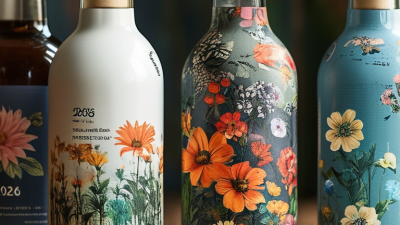
Mike Fairley, a long-standing label industry analyst and founder of Labels & Labeling, once described labels as “a brand’s silent salesperson.” The phrase remains useful. A textured wine label, a waterproof cosmetic label, or a finely registered food sleeve can influence trust within seconds. Yet appearance alone is not enough. Buyers must examine adhesive performance, color consistency, substrate sourcing, finishing accuracy, and production repeatability. These details often determine whether a label survives refrigeration, transport, or humid warehouse conditions.

Smithers’ industry studies also identify digital printing, personalization, and sustainable materials as important growth areas. However, sustainability claims can become vague. Recycled content may affect print stability, while compostable materials may require specific storage conditions. Buyers should request technical data sheets, sample approvals, compliance documentation, and realistic production timelines. Small mistakes become expensive at international scale. A supplier that communicates limitations honestly may be more valuable than one promising perfection. This guide reviews leading 2026 bespoke label printing services through that practical lens, combining capability, evidence, quality control, and buyer experience.
2026 Best Bespoke Label Printing Services for Global Buyers

Global Printed Label Market: 2023 Value and 2026 Buyer Trends

The global printed label market was valued at approximately US$48 billion in 2023, although estimates vary by scope and label type. It includes pressure-sensitive, shrink-sleeve, in-mold, and digitally printed formats. Demand remains strong across food, beverages, personal care, logistics, and household products. Customization is expanding. Short runs now matter more.

By 2026, global buyers are expected to seek flexible bespoke label printing services. They will compare color consistency, material performance, minimum order quantities, and delivery reliability. Digital printing should support faster artwork changes and smaller batches. Sustainable papers, thinner films, water-based inks, and recyclable constructions will receive closer attention. However, “eco-friendly” claims require evidence, not attractive wording.

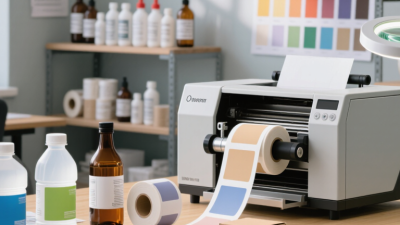
Experienced buyers should request physical proofs before approving production. A proof can reveal weak contrast, barcode distortion, or poor adhesion on curved packaging. Suppliers should explain tolerances, inspection methods, and storage conditions clearly. Regional humidity can affect paper labels. Cold-chain products need different adhesive testing.

Forecasts can be imperfect.

My caution is simple: market growth does not guarantee every supplier’s quality. Buyers should review samples, production records, and communication speed. They should also confirm whether the printer can maintain color across repeat orders. A low unit price may hide setup charges, waste, or slow corrections. For global purchasing teams, dependable execution often matters more than a dramatic quotation.
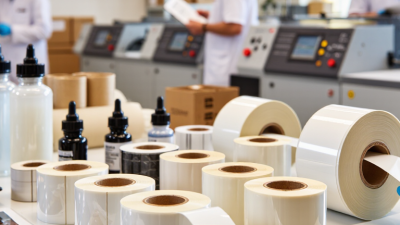
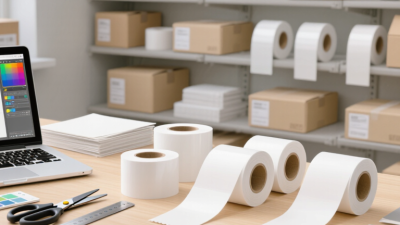
Bespoke Label Materials: Paper, Film, and Thicknesses from 40 Microns

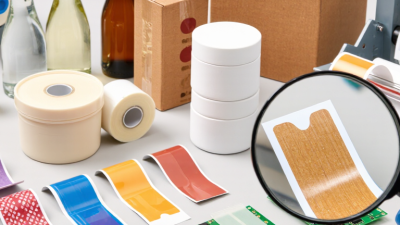
For global buyers, bespoke label quality begins with material selection, not decoration. Paper labels suit cartons, jars, and dry indoor applications. Common stocks range from 70 to 120 microns. They provide a natural texture and strong ink absorption. Film labels perform better around moisture, oil, refrigeration, and frequent handling. Polypropylene and polyethylene films often range from 40 to 100 microns.

A 40-micron film feels remarkably light. It can reduce material use and shipping weight. However, thin film demands accurate tension control during printing and converting. Poor handling may create wrinkles, curling, or weak registration. Smithers’ 2024 global label printing analysis forecasts continued market growth through 2028, supported by flexible packaging and shorter production runs. Its findings reinforce the need for converters with reliable digital proofing, color measurement, and adhesive testing.

Thickness alone does not define performance. Surface energy, opacity, liner release, and application temperature also matter. FINAT’s 2024 market data showed European self-adhesive label demand under pressure after earlier expansion. That shift makes waste control more important for international procurement. Request material samples before approving volume production. Test labels on the actual container, including chilled storage and hand friction. A 50-micron film may outperform 40 microns in practice, but not always. The cheapest specification can become the most expensive mistake.

Printing Methods Compared: Digital, Flexographic, and Gravure Production

2026 Best Bespoke Label Printing Services for Global Buyers

For global buyers, choosing a label printer starts with the production method. Digital printing suits short runs, changing artwork, and variable data. It needs no plates, so revisions are faster and setup waste is usually lower. It is flexible. However, unit costs may rise on very large orders, especially with several spot colors.

Flexographic printing uses plates and fast rotary presses. It performs well on long runs, rolls, textured papers, films, and common adhesive stocks. Colors can remain consistent when the printer controls ink viscosity, pressure, and drying. Plate preparation adds time and cost, but the expense often becomes reasonable at higher volumes. I have found that small text can lose clarity when pressure settings are poorly matched to the material.

Gravure printing uses engraved cylinders and delivers smooth ink coverage across demanding, high-volume work. It can produce rich solid colors and fine tonal images on film or coated stock. Cylinder engraving requires a larger initial investment, making it less practical for short campaigns. Buyers should request physical proofs, color measurements, adhesive samples, and a documented tolerance range. A test roll can reveal curling, scuffing, or poor release before shipment. Digital may win on speed, while flexographic and gravure methods can offer stronger cost control at scale. The “best” option is not always the cheapest quote. I would also review delivery records carefully, because an attractive sample cannot prove dependable international production.

2026 Best Bespoke Label Printing Services for Global Buyers - Printing Methods Compared: Digital, Flexographic, and Gravure Production

Indicative production ranges for standard self-adhesive labels. Actual results vary by artwork, material, dimensions, finishing, order quantity, and supplier location.
Comparison Dimension Digital Printing Flexographic Printing Gravure Printing Best Fit for Global Buyers
Core production method Computer-to-press inkjet or electrophotographic printing with no printing plates. Rotary relief printing using flexible photopolymer plates and fast-drying inks. Rotary intaglio printing using engraved cylinders and metered ink cells. Choose according to volume, artwork variation, finish requirements, and launch schedule.
Typical economical order size From short runs of approximately 100–5,000 labels; efficient for multiple SKUs. Generally economical from approximately 5,000–50,000 labels, depending on specifications. Usually most economical for very large, repeat orders, often above 100,000 labels. Digital for test orders and many variants; flexography for regular mid-volume programs; gravure for major repeat campaigns.
Setup requirements Minimal setup; artwork is prepared digitally and production can begin without plates. Requires flexographic plates, anilox specifications, ink setup, and press make-ready. Requires engraved cylinders, cylinder storage, ink preparation, and substantial press setup. Digital reduces entry cost; flexography and gravure reward repeatable specifications.
Typical lead time after artwork approval Approximately 3–10 business days, depending on finishing and shipping. Approximately 7–20 business days, including plate production and press scheduling. Approximately 15–35 business days for initial production; repeat runs may be faster. Digital is generally strongest for urgent launches, sampling, and replenishment.
Variable-data capability Excellent; supports unique text, barcodes, QR codes, numbering, images, and language versions in one run. Limited in the base print process; variable information normally requires an additional digital or coding stage. Limited in the base print process; variable information normally requires a separate finishing or coding stage. Digital is preferred for personalization, serialized labels, and regional SKU management.
Color reproduction Consistent process color with strong gradients and photographic detail; spot-color matching depends on the press and substrate. Broad color capability, including process, spot, opaque white, and specialty inks; results depend on plate and ink control. Excellent dense solids, smooth tonal transitions, and repeatability over long runs. Gravure suits highly image-led packaging; digital suits frequent artwork changes.
Print resolution and detail Typically high detail for small text, gradients, and photographic images; final performance depends on the press and label stock. High-quality graphics and fine text are achievable with modern plates and calibrated press control. Very high image detail and smooth continuous-tone reproduction for premium decorative work. Request physical proofs when brand color, microtext, or fine gradients are critical.
Substrate compatibility Coated and uncoated papers, films, synthetics, and selected specialty stocks approved for the specific press. Wide range of paper, film, foil-laminated, and other pressure-sensitive label materials. Best suited to compatible coated films, papers, and specialty webs selected for cylinder and ink requirements. Confirm food-contact, chemical-resistance, freezer, condensation, and recycling requirements before approval.
Finishing options Die-cutting, lamination, varnish, cold foil, white ink, tactile effects, and selected embellishments. Inline or offline varnish, lamination, cold foil, embossing, die-cutting, and specialty inks. High-volume coating, laminating, foiling, and converting; complex embellishment may require secondary operations. Flexography often offers the broadest integrated converting workflow.
Waste and make-ready Usually lower setup waste because plates and cylinders are not required; production waste still depends on finishing and substrate. Make-ready waste is higher than digital but can become efficient at scale and during long repeat runs. Higher initial setup investment and waste, offset by efficient high-volume production. Digital can reduce obsolete inventory when demand or artwork is uncertain.
Cost structure Higher unit cost at very large volumes, but low or absent plate charges and economical short runs. Moderate setup cost with declining unit cost as quantity increases. High cylinder and setup cost, but potentially the lowest unit cost for very large repeat orders. Compare total landed cost, not only the quoted unit price.
Best use cases Prototypes, seasonal products, promotional labels, short runs, multilingual versions, and personalized campaigns. Retail, beverage, personal-care, household, and food labels with recurring medium-to-high volumes. Large global campaigns requiring consistent premium graphics across extensive repeat volumes. Match the method to forecast certainty and the number of active label versions.
Main limitation Unit economics may be less favorable for extremely large standardized runs; color behavior can differ between digital platforms. Plate preparation, make-ready, and changeover reduce efficiency for many short or frequently changing SKUs. High entry cost, longer preparation, and limited flexibility make it unsuitable for small or frequently changing orders. For custom procurement, evaluate minimum order quantities, proofing, color tolerances, logistics, and re-order policy together.
Procurement note: Before placing an international order, confirm label dimensions, adhesive grade, liner type, core and roll specifications, barcode verification, regulatory markings, ink durability, packaging method, Incoterms, export documents, and destination-country compliance.

Global Label Compliance: GS1 Barcodes, GHS, FDA, and EU Requirements

Global label compliance starts before artwork reaches the press. A bespoke printing service should review the product, market, material, and application conditions. GS1 barcodes need correct data, adequate quiet zones, and reliable contrast. A barcode that looks sharp may still fail under warehouse scanning.

For hazardous products, GHS labels require accurate pictograms, signal words, hazard statements, and precautionary statements. Symbols must remain clear after handling, moisture, and temperature changes. EU shipments may also require local-language information and alignment with current CLP and REACH obligations. Requirements can vary by product category and destination country.

FDA-related labels demand careful review of product claims, ingredients, net quantity, and intended use. Food, cosmetic, and other regulated products may follow different rules. The printer should confirm dimensions, adhesive performance, ink durability, and variable data before production. A small test run helps expose problems with wrinkles, poor adhesion, or unreadable codes. Keep records.

Good suppliers request regulatory files, not just a finished PDF. They can compare proof details with approved product information and arrange scan verification. Yet printing expertise cannot replace legal review. Rules change, translations can be imperfect, and one global template may not suit every market. That weakness deserves attention. Final approval should involve qualified compliance staff, especially when labels carry multiple languages, warnings, or traceability data.

Supplier Evaluation Metrics: MOQ, Lead Time, Color ΔE, and ISO 9001

2026 Best Bespoke Label Printing Services for Global Buyers

For global buyers, supplier evaluation should begin with measurable production limits, not attractive samples. MOQ affects inventory risk, especially when a product uses several sizes, finishes, or languages. A practical supplier should explain whether the MOQ applies per design, color, or total order. Ask for a written breakdown.

Lead time needs separate production and shipping estimates. A clear schedule might show artwork approval, proofing, printing, inspection, and dispatch. Delays often begin with unclear approvals. Request a digital proof and a physical color sample before mass production. It may add days, but it reduces expensive reprints.

Color ΔE deserves technical attention. Agree on the color standard, lighting condition, and acceptable tolerance before ordering. A supplier using spectrophotometer readings is more reliable than one promising “perfect color.” However, ΔE alone cannot describe gloss, texture, or metallic effects. That detail is often missed. ISO 9001 certification indicates a documented quality system, not flawless labels. Check the certificate scope, corrective-action records, and inspection procedure. I have seen low prices hide weak traceability. The uncomfortable lesson is simple: evaluation criteria must be verified, not merely listed.

2026 Best Bespoke Label Printing Services for Global Buyers

Reference procurement targets for evaluating bespoke label suppliers: minimum order quantity of 500 units, a standard production lead time of 10 business days, color accuracy at or below ΔE00 2.0, and ISO 9001 quality-management certification. Lower MOQ, shorter lead time, and lower ΔE00 indicate better performance.